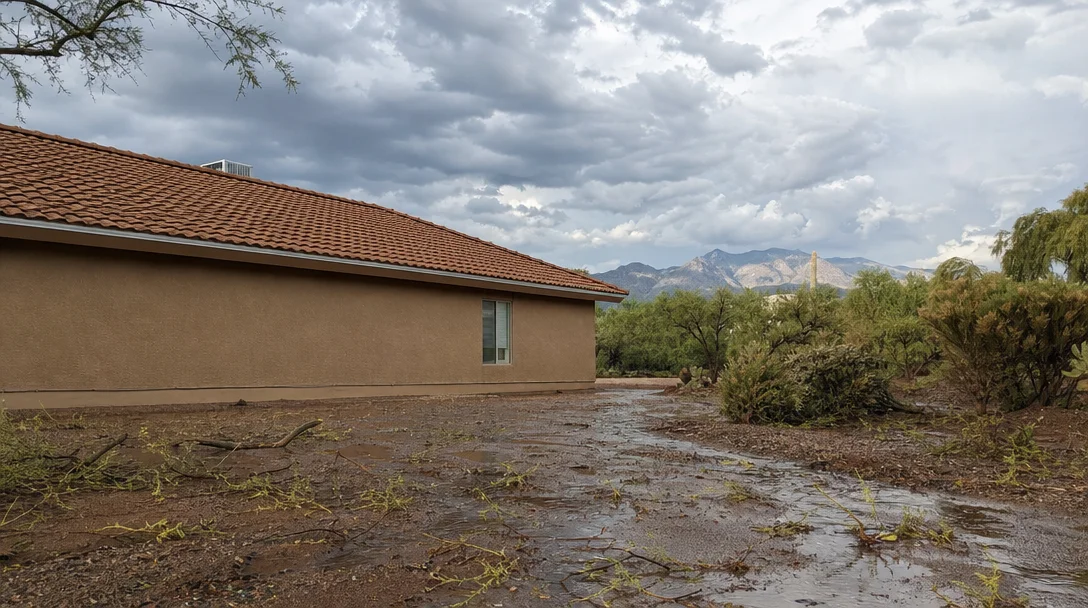
The Real Purpose of a Ground-Level Roof Check
A ground-level roof check after a monsoon storm is a screening tool, not a diagnosis. It tells you whether something obvious went wrong so you know if a closer look is needed. It can't tell you the full story of what's happening under the tile or across a flat roof deck. Think of it like checking your car after you hit a pothole. You can see a bent rim from the sidewalk. You can't see whether the alignment is shot. Roofs work the same way: the visible damage and the actual problem are often two different things in two different places. So what is a ground check good for? Three things, mostly:- Deciding whether you need a professional roof inspection right now or whether it can wait.
- Catching emergency-level damage early, like a slipped section of tile or exposed decking that will turn into a soaked ceiling during the next storm.
- Building a simple record of what your roof looked like before and after a storm, which matters if you end up filing an insurance claim.
What You Can See From the Ground
Start in the driveway, not on a ladder. Binoculars help a lot, and so does morning light, when low shadows make lifted edges easier to spot. Here's what's genuinely visible from the ground on a typical Southern Arizona home:- Broken or slipped tiles. A slipped tile leaves a dark gap in an otherwise even row.
- Debris piled on the roof or in valleys. Branches, gravel, and mesquite litter hold water where water shouldn't sit.
- Granules in gutters or at downspout outlets. On shingle roofs, heavy granule loss shows up on the ground long before it shows up as a leak.
- Bent, loose, or separated flashing around chimneys, parapet walls, and evaporative coolers.
- Sagging or detached gutters, and downspouts pulled away from the wall.
- Stains streaking down stucco or fascia, which often means water escaped where it wasn't supposed to.
- Blown-off ridge caps or exposed edge metal along the roofline.
- Walk the full perimeter and look up at the roofline edge from every side.
- Scan each slope for missing, cracked, or out-of-line tiles.
- Check where the roof meets anything vertical: a chimney, parapet, second-story wall, or cooler curb.
- Look at gutters, downspouts, and the ground below them.
- Check the walls under the roofline for fresh water streaking or blistered paint.
- Look inside the attic with a flashlight only if you have safe access. Summer attics can get dangerously hot, so go in the morning or skip it.
- Write down what you found and photograph it, with timestamps on.
Frequently Asked Questions
How do I know if I need a professional roof inspection after a storm?
You need one if your ground check turns up any warning sign, like stucco stains, missing tiles, or sagging gutters. You should also consider one if you find nothing but a big storm hit with high winds. Hidden problems like failed underlayment or a cracked cooler pan never show up from the driveway. A short professional inspection sorts out whether what you saw is cosmetic or the start of a leak.What's the biggest misconception homeowners have about checking roof damage from the ground?
The biggest misconception is that straight, undamaged-looking tiles mean the roof is fine. Tile is a shell that sheds water and takes UV damage. The waterproofing layer underneath is what keeps your house dry, and you can't see any of it from the ground. That's why a rust streak on stucco or a small ceiling stain matters more than a tile that looks perfect.Why do flat roofs hide more damage than tile roofs?
From ground level you usually see only a parapet wall. Ponding water, blistered coating, and seam separation all sit on top of the deck where you can't look. Many older homes and commercial buildings in Southern Arizona have this roof style, which is why a walk-around alone isn't enough for flat or low-slope roofs after a monsoon storm.Can heavy monsoon rain damage a roof even if nothing looks different outside?
Yes. Wind-driven rain can push water under flashing or through failed sealant at a cooler penetration without any visible change at the roofline. The damage then shows up weeks later as a stain or soft spot on an interior ceiling. That's why checking inside your home, not just the roof, is part of a proper ground check.How often should I check my roof during monsoon season?
Check after every significant storm, not just once at the end of the season. Monsoon damage stacks up storm by storm rather than happening all at once. A ten-minute walk-around with photos after each big storm gives you a record and catches problems early. If anything looks off, or you're unsure what you're seeing, a professional inspection settles it.What should I photograph when documenting roof damage from the ground?
Photograph anything unusual: cracked or slipped tiles, debris in valleys, streaking on stucco, bent flashing, and gutter damage. Take wide shots of each side of the roof plus close-ups of specific problem spots, with your phone's timestamp on. That record helps if damage shows up later and you need to show when a storm likely caused it.For additional information, contact: DC Roofing of Arizona 227 E Valencia Rd Unit YD3, Tucson, AZ 85706